

In short
Pump and water-pressure services cover booster sets that raise cold-water pressure, circulation pumps that move heating and hot water, and pressurisation units that keep sealed systems topped up. Warning signs include fluctuating pressure, frequent pump cycling, unusual vibration, leaks and loss of circulation, and the cause may lie in controls, pressure settings or mechanical wear.
What the work may involve
- Booster pump set investigations and repair
- Circulation pump faults and replacement
- Pressurisation unit and expansion vessel checks
- Pump control and pressure switch issues
- Low water pressure investigations
Warning signs to report
- Fluctuating or low water pressure
- Pumps starting and stopping frequently
- Unusual vibration or noise from pumps
- Leaks at pump seals or connections
- Loss of heating circulation or cold zones
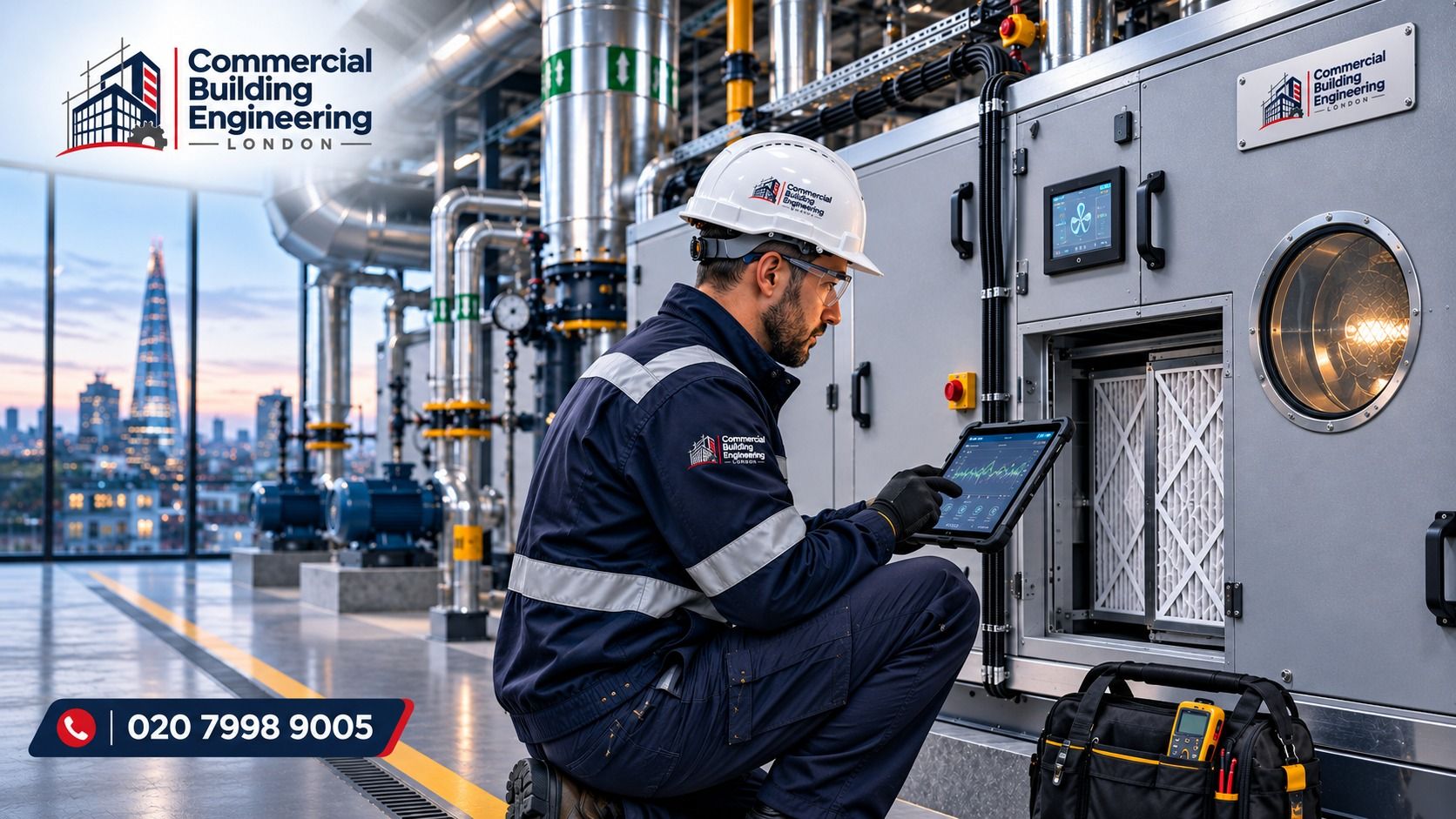
Three kinds of pump system
| System | What it does | Typical symptoms when it fails |
|---|---|---|
| Booster pump set | Raises cold-water pressure to upper floors | Low or fluctuating pressure, pumps cycling |
| Circulation pump | Moves water around heating or hot-water circuits | Cold zones, slow hot water, boiler lockouts |
| Pressurisation unit | Keeps sealed systems at the right pressure | Falling system pressure, plant tripping |
Finding the real cause
Pump symptoms do not always mean the pump has failed. Pressure problems can come from controls and pressure switches, expansion vessels that have lost their charge, valves that are closed or failing, leaks elsewhere in the system, or the incoming supply. Engineers check the arrangement as a whole before replacing equipment.
What facilities teams can do
- Note when the problem happens (time of day, demand, weather)
- Record gauge readings and any alarms on the pump panel or BMS
- Look for visible leaks around pumps, vessels and valves
- Report noise, vibration or heat from pump motors
Do not adjust pressure settings, isolate pumps or open pressurised components unless you are competent and authorised to do so.
Ongoing care
Pump sets, vessels and pressurisation units benefit from regular checks as part of planned preventative maintenance. For low pressure at outlets, see also commercial plumbing.
Discuss your pumps & water pressure requirements
Send the equipment details, symptoms and site address through Flair Facilities Ltd, or call to talk it through.
Pumps & Water Pressure FAQs
What causes low water pressure in commercial buildings?
Supply issues, booster-pump faults, leaking pipework, valve problems or other system conditions. An engineer may need to assess the complete water-pressure arrangement to identify the cause.
Why does our booster pump keep cycling on and off?
Frequent cycling can relate to a waterlogged or failed pressure vessel, pressure switch or control settings, leaks in the system, or wear in the pump itself. It increases wear and should be investigated.
What does a pressurisation unit do?
It keeps a sealed heating or chilled-water system at the right pressure by topping up water as needed. If it fails, system pressure can drop and boilers or other plant may lock out.
Is a failed circulation pump urgent?
It can be, because it can stop heating or hot water reaching parts of the building. Where the building is occupied, and especially in winter, use 24/7 emergency support.
Useful UK references
- Pressure systems Health and Safety Executive
- Water Supply (Water Fittings) Regulations 1999 legislation.gov.uk
Last reviewed 20 November 2026. General guidance only; it does not replace a qualified site-specific assessment.