

In short
Plant room engineering covers the assessment, repair, component replacement, refurbishment and planned maintenance of the equipment in a commercial plant room. Because boilers, pumps, pressurisation units, calorifiers, valves and controls share the same space and depend on each other, engineering decisions should consider their combined performance.
What the work may involve
- Equipment condition assessment
- Repairs and component replacement
- Plant room refurbishment
- Planned maintenance of plant
- Coordination of heating, water and controls work
Warning signs to report
- Repeated plant alarms or trips
- Leaks, weeping valves or corrosion
- Pressure gauges outside normal readings
- Unusual noise, vibration or heat
- Equipment running constantly or cycling frequently
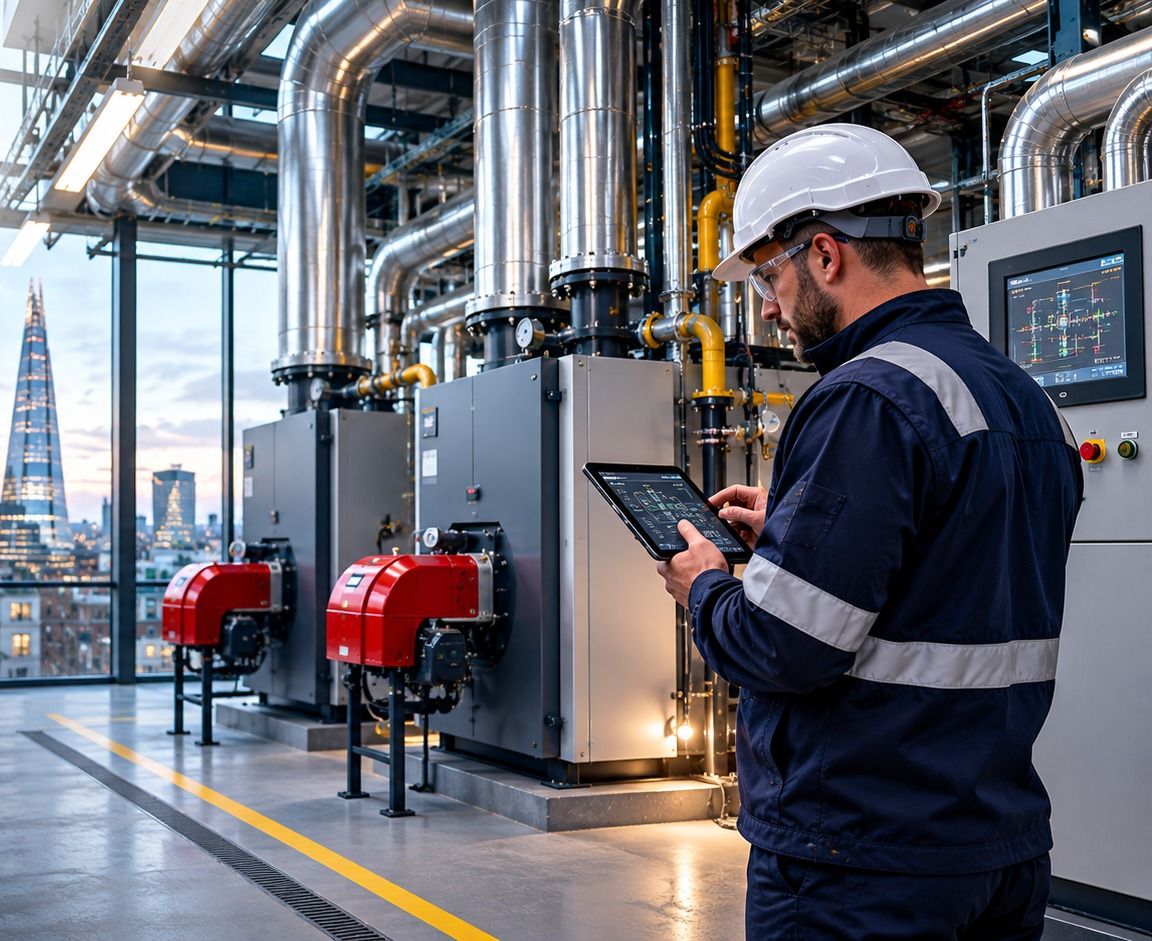
One room, several systems
A commercial plant room often serves heating, hot water and sometimes cooling for the whole building. The equipment in it shares water, power, controls and space, so one failure can quickly affect several services. For example, a failed pressurisation unit can drop pressure across a heating circuit and lock out the boilers.
Plant room engineering work
- Condition assessments recording the state of each asset and its priority for repair or replacement
- Repairs and component replacement for pumps, valves, heat exchangers, calorifiers and controls
- Refurbishment where plant is obsolete, unreliable or no longer suited to the building
- Planned maintenance covering the plant as a coordinated system
What to look out for
Walk-round checks by competent site staff can spot early warning signs: gauges outside their normal range, weeping valves and joints, corrosion, unusual noise or vibration, and equipment that never seems to stop. Log these with dates and photographs and report them, rather than adjusting equipment.
Plant rooms contain pressurised systems, hot surfaces and live electrical equipment. Older buildings may also contain asbestos. Only competent, authorised people should work on plant.
Planning improvements
When repair costs rise, a structured review helps decide what to fix now and what to plan for. See planned preventative maintenance and the knowledge hub for plant room guidance.
Discuss your plant rooms requirements
Send the equipment details, symptoms and site address through Flair Facilities Ltd, or call to talk it through.
Plant Rooms FAQs
What equipment is usually found in a commercial plant room?
It varies by building, but commonly boilers or heat pumps, circulation and booster pumps, pressurisation units, expansion vessels, calorifiers or water heaters, heat exchangers, valves, water treatment and BMS controllers.
Why assess a plant room as a whole?
Plant room equipment is interconnected. A pump fault can cause boiler lockouts, a failed pressurisation unit can affect several systems, and control problems can make healthy equipment behave badly. Looking at combined performance avoids fixing symptoms only.
When does a plant room need refurbishment?
When equipment is unreliable, parts are hard to obtain, leaks and corrosion are recurring, or the plant no longer suits how the building is used. A condition assessment helps prioritise what to repair, replace or plan for.
Are plant rooms safe for building staff to enter?
Plant rooms contain hot surfaces, pressurised systems, rotating equipment and electrical panels. Access should follow your site procedures, and only competent people should operate or work on the equipment.
Useful UK references
- Pressure systems Health and Safety Executive
- Pressure Systems Safety Regulations 2000 legislation.gov.uk
- Asbestos Health and Safety Executive
Last reviewed 20 November 2026. General guidance only; it does not replace a qualified site-specific assessment.